
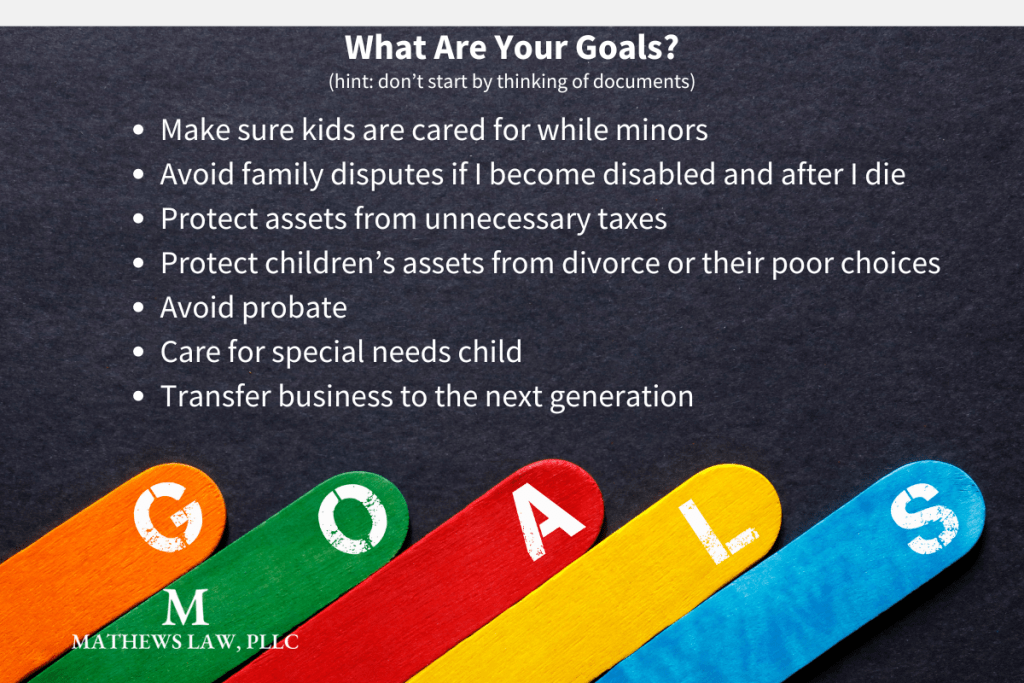
Estate planning is a crucial step in ensuring that your assets and loved ones are protected according to what you want. The first and most important step in this process is to determine your goals. Understanding what you want to achieve with your estate plan will guide you in making the right decisions and choosing the appropriate tools. We recommend considering these goals so we can make the right recommendations for your estate plan. Here are some common goals to consider:
- Ensuring Your Kids Are Cared For While Minors
If you have young children, your primary concern is likely ensuring their care and well-being in the event that something happens to you. This includes appointing a guardian who will take over their care and managing the financial resources that will support them throughout their life. Consider setting up a trust to manage the funds for your children’s education, health, and general living expenses. - Avoiding Family Disputes if You Become Disabled and After You Die
Family disputes can arise over the management of your affairs if you become incapacitated or after you die. Having clear, legally binding documents that outline your wishes can minimize the potential for conflict. We’ll talk with you about the best approach for your unique situation, but in general a comprehensive estate plan should include:- Durable Power of Attorney: Appoint someone to manage your financial affairs if you become incapacitated.
- Healthcare Proxy or Living Will: Specify your healthcare preferences and designate someone to make medical decisions on your behalf.
- Clear Will or Trust: Detail how your assets should be distributed to prevent misunderstandings.
- Protecting Assets from Unnecessary Taxes
One of the primary goals of estate planning is to minimize the tax burden on your estate and for your beneficiaries. Strategies to consider include:- Gifting: Reduce your taxable estate by gifting assets during your lifetime.
- Trusts: Use various types of trusts, such as revocable or irrevocable trusts, to manage and protect your assets.
- Charitable Donations: Consider making charitable contributions to reduce your estate’s taxable value.
- Protecting Children’s Assets from Divorce or Their Poor Choices
To ensure that your children’s inheritance is protected from divorce settlements or irresponsible financial decisions, consider setting up a trust. This allows you to specify how and when your children can access their inheritance as well as include provisions that protect the assets from being considered marital property in a divorce. - Avoiding Probate
Probate can be a lengthy and costly process. To avoid it, consider setting up a revocable living trust. By transferring your assets into the trust, you can ensure that they are distributed according to your wishes without going through probate. Other tools to consider include:- Joint Ownership: Assets held jointly with the right of survivorship pass directly to the co-owner without probate.
- Beneficiary Designations: Designate beneficiaries for accounts such as life insurance, retirement plans, and payable-on-death accounts.
- Caring for a Special Needs Child
If you have a special needs child, it’s crucial to plan for their long-term care and financial security especially without jeopardizing their eligibility for government benefits if that applies. Consider options for their care. - Transferring a Small Business to the Next Generation
If you own a small business, planning for its succession is essential to ensure its continuity. Consider the following steps:- Business Succession Plan: Develop a plan that outlines how the business will be transferred, who will take over, and how they will be trained.
- Buy-Sell Agreement: Create an agreement that allows for the smooth transfer of business ownership, whether through a sale to a co-owner or passing it to a family member.
- Life Insurance: Consider a life insurance policy to provide liquidity for the business transition.
By identifying what you want to achieve—whether it’s caring for minor children, avoiding family disputes, minimizing taxes, protecting your children’s assets, avoiding probate, providing for a special needs child, or ensuring the smooth transfer of a small business—you can take the necessary steps to achieve these goals.
When you’re ready, we’re ready. Schedule a time to chat to get started.