-
What Does the Trump Victory Mean for the Estate Tax Exemption?

The outcome of the recent election has some Americans asking how the federal estate tax exemption might be affected. This is an especially important topic for estate planning, given that the current exemption rate is set to change unless new legislation is enacted. At Mathews Law, we’re here to help you understand the current law,…
-
Revocable vs. Irrevocable Trusts: Which Is Better?

When it comes to estate planning, trusts are powerful tools that offer several key benefits, such as avoiding probate, reducing estate taxes, and providing privacy. However, not all trusts are created equal. The two main types are revocable and irrevocable trusts, each with its own set of advantages and disadvantages. Here, we’ll explore the differences…
-
The Hidden Costs of Procrastinating Your Estate Plan

If the thought of making an estate plan seems daunting, it might be way down on your list of priorities. After all, with day-to-day expenses, savings goals, and unexpected costs, thinking about what happens to your assets after you’re gone can feel intimidating and overwhelming. As an estate planning attorney, I’ve seen how procrastinating on…
-
How to Talk About Estate Planning
There’s an important conversation lurking and it’s one we often avoid—estate planning. It’s easy to see why. The topic of what happens when we’re no longer here can feel uncomfortable or even morbid. Even though death is a necessary part of life, we avoid it because it makes us feel uneasy or outright scared. This…
-
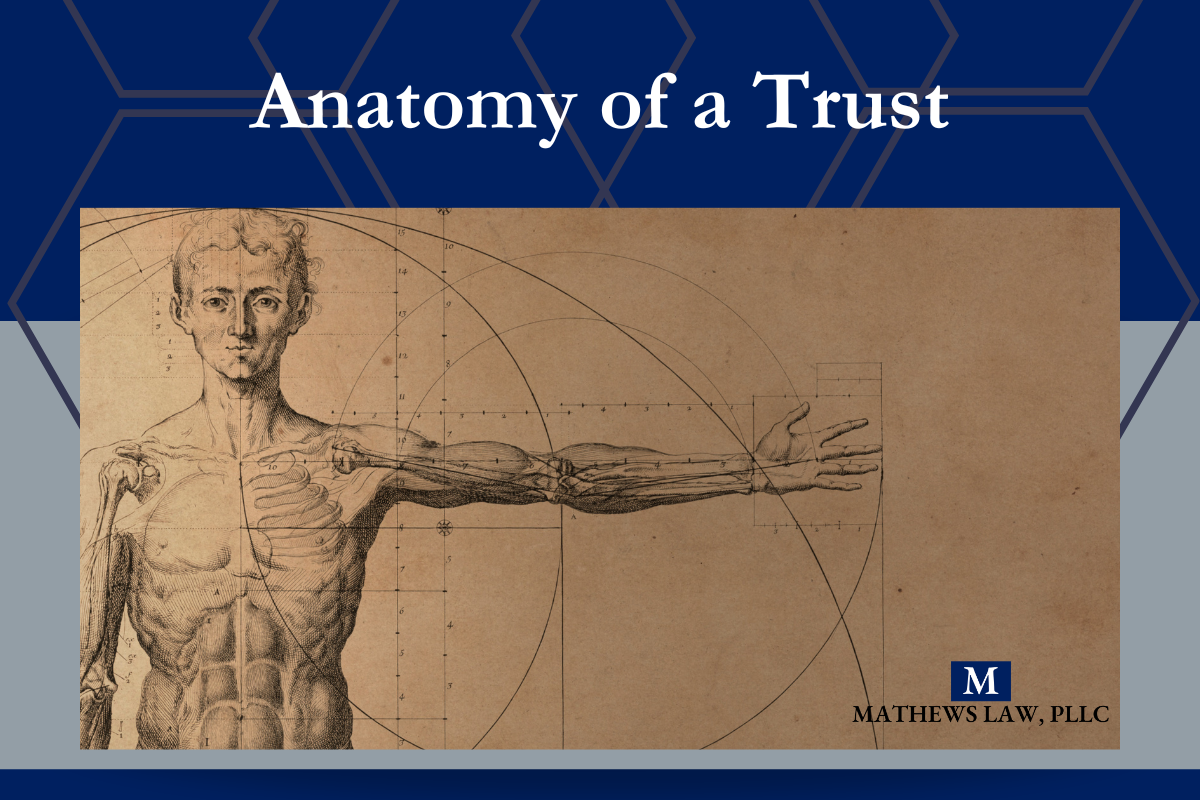
Anatomy of a Trust
-
Value of an Estate Planning Attorney Over Online Legal Services

When it comes to preparing your will, the decision of which service to use is critical. You want to ensure that your final wishes are clearly stated, legally sound, and tailored to your unique circumstances. When you search for estate planning services, you’ll inevitably be offered the option to create your will using an online…
-
How Do Assets Pass to Beneficiaries After Death?

You might be wondering what happens to your stuff after you’re no longer around. Today, we’ll explore the two primary paths through which assets are transferred to beneficiaries after one’s passing – one entails legal proceedings, while the other offers a straightforward, more hassle-free process. Outside of Court The easiest option is passing assets outside…
-
Probate: Why Avoiding it Matters in Estate Planning
Probate is a term that often crops up in discussions about estate planning, but a lot of people don’t know what it is. More importantly, they’re not sure why they should strategize to avoid it. Understanding ProbateProbate is the legal process through which a deceased person’s assets are distributed to their heirs and beneficiaries. It…
-
Top 3 Reasons Singles Need an Estate Plan

Singles need to plan for unexpected circumstances possibly even more urgently than those who are married. REASON #1: Singles need to choose their decision-makers. Being single can be awesome, but one drawback is that without a spouse, it is not always obvious who should make decisions for you when you cannot make them for yourself.…
-
What Is The Difference Between a Living Will and a DNR?
A “living will” and a Do Not Resuscitate (DNR) are important documents that guide medical decisions if you’re unable to make them yourself. However, they serve different purposes and have key distinctions. Living Will In Virginia and Maryland, a “living will” is part of an advanced medical directive, allowing adults to outline their medical preferences…